
What you need to know
- Customers are actively forming price expectations before they ever speak to a dealer, using a mix of comparable listings, valuation tools, artificial intelligence (AI) and more.
- Buyers who use structured, data-driven information tend to arrive with clearer expectations, feel more confident in pricing, and walk away more satisfied. Those without a defined approach are more likely to feel uncertain and less happy with their experience.
- For dealers, this means pricing conversations are increasingly about validating what the customer believes and helping them enhance their understanding of the market. When customer expectations don’t fully align with market pricing, clear and data-backed context helps bridge that gap.
How customers are estimating vehicle values
Customers aren’t walking into dealerships wondering what a car is worth. They arrive with a number in mind.
Most customers build that estimate with multiple sources, starting with what they can see in the market. Checking comparables on listing sites is the most common approach, used by 52% of buyers. From there, many layer in additional information sources:
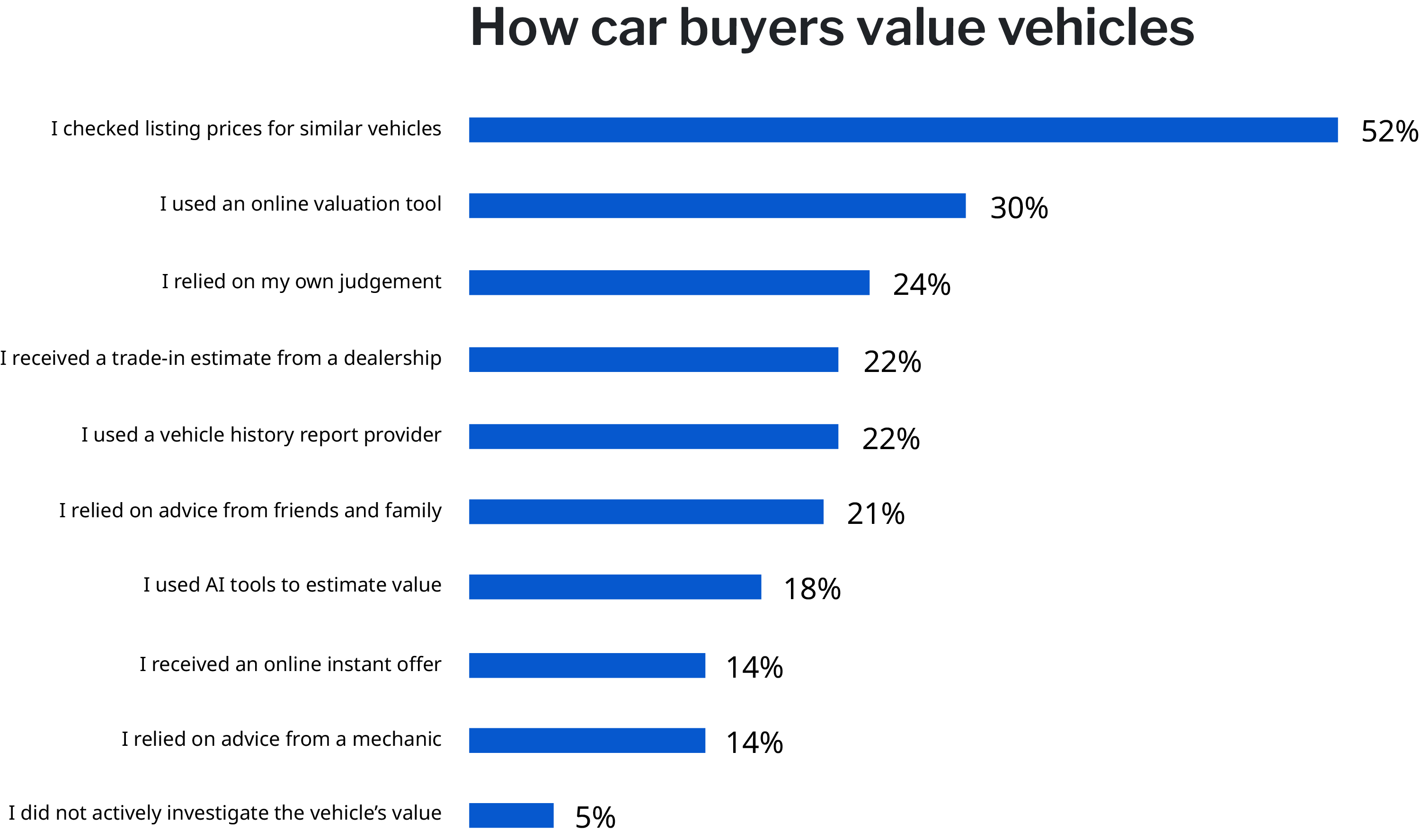
Table 1: During your recent used vehicle purchase, how did you determine how much you were going to buy your vehicle for?
The result is a customer who shows up feeling informed and anchored to a value. Whether their estimate is accurate or not, is another story.
Better valuation insights help align expectations
Not all valuation sources carry the same weight. When customers rely on more structured, data-driven inputs, the outcome tends to feel more predictable.
For example, nearly half of valuation tool users (49%) say they paid less than expected, compared to just 29% of non-users. In other words, customers who come in with a clearer view of value are more likely to feel the final price met or exceeded their expectations.
At the same time, customers without a clear valuation approach see more variation:
- Over 27% say they paid more than expected
- 13% say they paid significantly more
This isn’t about customers paying more or less. It’s about expectations being closer to reality.
When expectations are grounded in market data, there is less friction, fewer surprises, and conversations move more easily from questioning a price to understanding it.
Preparation builds buyer confidence
How a customer comes up with their price estimate has a clear impact on how confident they feel walking into your store.
Among valuation tool users, 31% say they felt extremely confident in their price estimate. That drops to 15% among non-users, and just 9% among those who didn’t estimate value at all.
At the other end of the spectrum, the least confident buyers are also the least prepared. Among customers who didn’t actively estimate value, 13% say they were not confident at all, versus virtually none among valuation tool or AI users.
That confidence gap shows up in the experience. Confident customers move through the process more comfortably. They’re more decisive, more engaged, and more likely to feel good about the outcome.
When confidence is low, customers are more likely to second-guess the deal. That uncertainty doesn’t just affect the purchase. It shapes how they remember the experience and whether they come back to you the next time they are in the market.
This is where dealers can make a real difference. Buyers don’t just want a number. They want to understand where it came from. Showing the work, using real market context, and explaining how your price was built creates confidence and trust.
AI driven valuations change expectations
AI is adding a new layer to the valuation process.
-
18% of buyers report using AI to estimate vehicle value
-
These customers report high confidence and strong perceptions of value
But the way AI arrives at a value can be very different from other valuation approaches.
The number a customer sees may vary based on:
- The tool or platform being used
- The prompt used
- What specific market data the platform has access to or is referencing
Unlike structured valuation tools, that process is not always visible to the customer.
This creates a new dynamic for dealers. Customers may arrive confident in a number without a clear understanding of how it was built or whether it reflects current market conditions.
How dealers can respond
Customers are arriving with a view of value. The opportunity is to guide and align it.
- Understand how the expectation was formed
Ask what sources they used. This helps you gauge how grounded their number is and where gaps may exist. - Anchor the conversation in market reality
Use real comparables and current listings to show where the vehicle sits in the market. - Add context they may be missing
Bring in vehicle-specific factors like history and condition that influence price. - Address uncertainty, not just the number
If expectations are misaligned, focus on explaining why rather than correcting immediately. - Align on value before moving to price
When customers understand how a price is supported, it becomes easier to agree on what’s fair.
The bottom line
Customers are valuing vehicles before they ever speak to a dealer. And the way they do it shapes everything that follows.
When customers use structured, data-driven sources, they tend to:
- Arrive with clearer expectations
- Feel more confident in pricing
- Have a better overall experience
- Be more comfortable with the outcome
For dealers, the shift is subtle but important.
With an expanded consumer valuation toolbelt, the conversation is no longer about introducing price. It’s about responding to an expectation that already exists. When customers understand how a price fits within the market, the focus shifts. It becomes less about challenging the number and more about confirming it.
That’s where clear, data-backed context makes a difference. Showing how a vehicle’s history and position in the market support its price helps turn uncertainty into confidence and moves the deal forward.
Share your thoughts